Retail financing companies, from banks to the funding partners Cobblegrove works with, can fund three different store costs on three different structures: stock on inventory financing, equipment on an equipment loan, and repeat supplier bills on a line of credit. Below, one invented paint and hardware store in Jerome, ID adds a second paint brand, an automated tinting machine with a shaker, and a reorder line sized from its own supplier invoices.
An invented hardware store carries $19,480 of new paint stock for 90 or 120 days, puts a $14,270 tinting station on a 36-month equipment loan, and sizes a supplier reorder line at $8,500 from twelve weeks of invoices.
Inventory Financing for a Second Paint Brand at a Jerome, ID Hardware Store
Building material and garden equipment and supplies dealers with a ZIP 83338 address numbered 10 in 2023 (ZIP Code Business Patterns, NAICS 444).
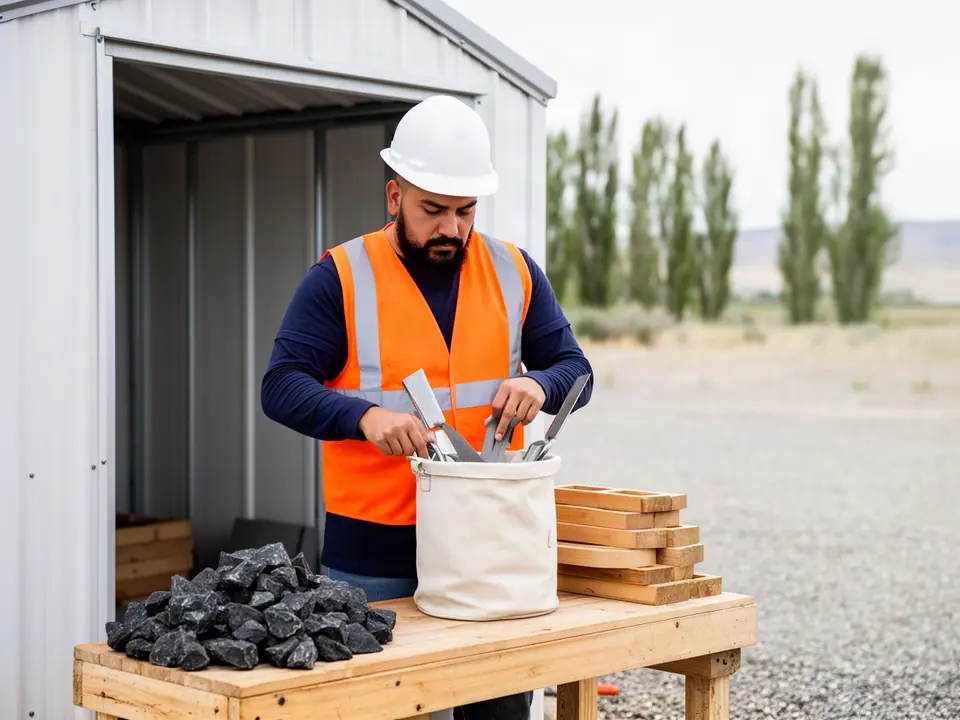
An invented hardware store adds a second paint brand: tint bases, primers, stains, rollers and brushes costing $19,480 from the distributor. Through inventory financing at a 13.66% annual rate, the invented stock costs $656.13 in interest if it is paid off at day 90, or $874.84 at day 120.
The extra 30 days add $218.71 of interest in this invented case, and the store owes $20,354.84 in all if it runs the full 120 days. A funding partner may set a different term and may ask how the stock is counted and stored, for example a list of the items with their cost and the distributor invoice that matches it.
How much of the line has to sell? At an invented 40% gross margin, the $19,480 of stock carries a retail value of $32,466.67. To have the full $20,354.84 in hand by day 120, the invented store needs to sell 62.7% of that retail value in four months; the rest of the line stays on the shelf, paid for.
An Automated Tinting Machine, a Paint Shaker and a Freestanding Chip Display on One Equipment Loan
Mixing the new brand in the store calls for equipment. The invented tinting station: an automated paint tinting machine at $10,140, a paint shaker at $2,690 and a freestanding color chip display at $1,440, $14,270 together.
Spread over 36 months at a 12.39% annual rate, that invented package costs $476.63 each month; $2,888.68 of the $17,158.68 total is interest. The tinting machine and shaker plug into existing outlets here; a new circuit or any wall work for them would be property work, outside what Cobblegrove arranges.
Shortening the invented loan to 24 months raises the payment to $674.34, $197.71 more each month, and trims $974.52 off the interest. The store in this invented case keeps the 36-month payment because the reorder line below also draws on the same cash.
Sizing a Supplier Reorder Line From Twelve Weeks of Invoices
Supplier bills repeat, so they fit a credit line better than a lump sum. The invented store lists twelve weeks of distributor invoices from its own books:
| Week | Invoices |
|---|---|
| Week 1 | $3,870 |
| Week 2 | $2,140 |
| Week 3 | $4,615 |
| Week 4 | $1,980 |
| Week 5 | $2,760 |
| Week 6 | $5,185 |
| Week 7 | $3,315 |
| Week 8 | $2,085 |
| Week 9 | $4,430 |
| Week 10 | $2,690 |
| Week 11 | $3,960 |
| Week 12 | $2,305 |
Across the invented twelve weeks the invoices total $39,335, an average of $3,277.92 a week. The largest single week, week 6 at $5,185, and the largest two weeks back to back, $8,500, set the size: a line of credit near $8,500 covers any two invented weeks at once.
Drawing the invented week 6 amount and paying it back after 30 days at a 15.41% annual rate adds $65.67 of interest. Interest in this invented case runs only on the amount drawn, so the unused part of the line adds no interest, though an offer may carry other fees. A gap in payroll rather than stock belongs to working capital instead.
By Cobblegrove Business Funding · Updated